
Every garage door eventually presents its owner with the same fork in the road: pay for another repair, or replace the whole thing. In Bloomington, where winter punishes weak hardware and energy costs make insulation a real line item, the answer is less obvious than it looks. A $250 repair on a 20-year-old uninsulated door can be the wrong call, and a $3,000 replacement of a 6-year-old door with one bad spring is just as wrong in the other direction. This guide gives you an honest framework for deciding, built on how doors actually age in Minnesota.
The Two Rules of Thumb (and Their Limits)
The garage door industry has two widely used rules of thumb. The first is the 50 percent rule: if a repair costs more than half of replacement, replacement usually wins. The second is the age rule: a door past 15 to 20 years with a major failure is generally a replacement candidate, while a door under 10 years with an isolated failure is generally worth repairing. These are useful starting points, not laws. A 17-year-old door that has been maintained, with fresh rollers and a recent opener, can have years left. A 9-year-old door with rusted bottom sections, fatigued springs, and a failing opener is already telling you the answer.
The honest version of both rules is simpler: repair the component, replace the system. When one part fails on an otherwise sound door, repair it. When failures start arriving in clusters, or the door's fundamental design (no insulation, obsolete parts, structural rust) is the problem, no single repair fixes that. The rest of this guide helps you tell which situation you are in.
Signs Repair Is the Right Call
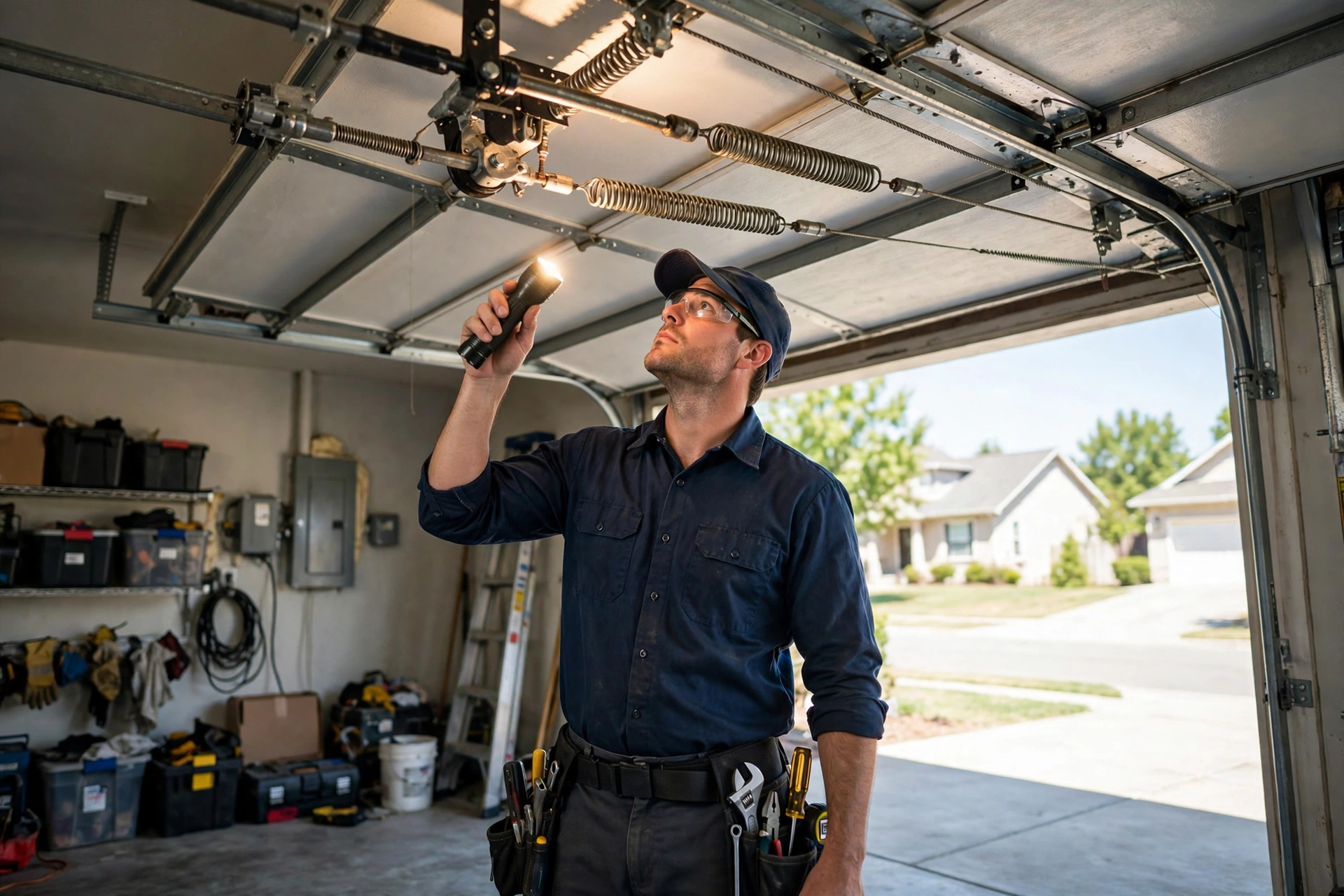
Repair wins when the door is structurally sound and the failure is isolated. A broken spring on a 7-year-old insulated door is a textbook repair: the door itself has a decade or more of life, the parts are standard, and the fix restores the system to full function. The same goes for a failed opener on a solid door, worn rollers causing noise, a misaligned track from a minor impact, or faulty safety sensors. In each case, the repair addresses the actual problem without asking a healthy door to retire early.
Age and parts availability are the practical checks. If the door is under about 12 years old, the manufacturer still makes the parts, and the panels are straight and rust-free, repair is almost always the economical choice. A good technician will also tell you when a repair is straightforward versus when it is the first of several, which is why the on-site inspection matters more than any rule of thumb.
Signs Replacement Is the Smarter Move
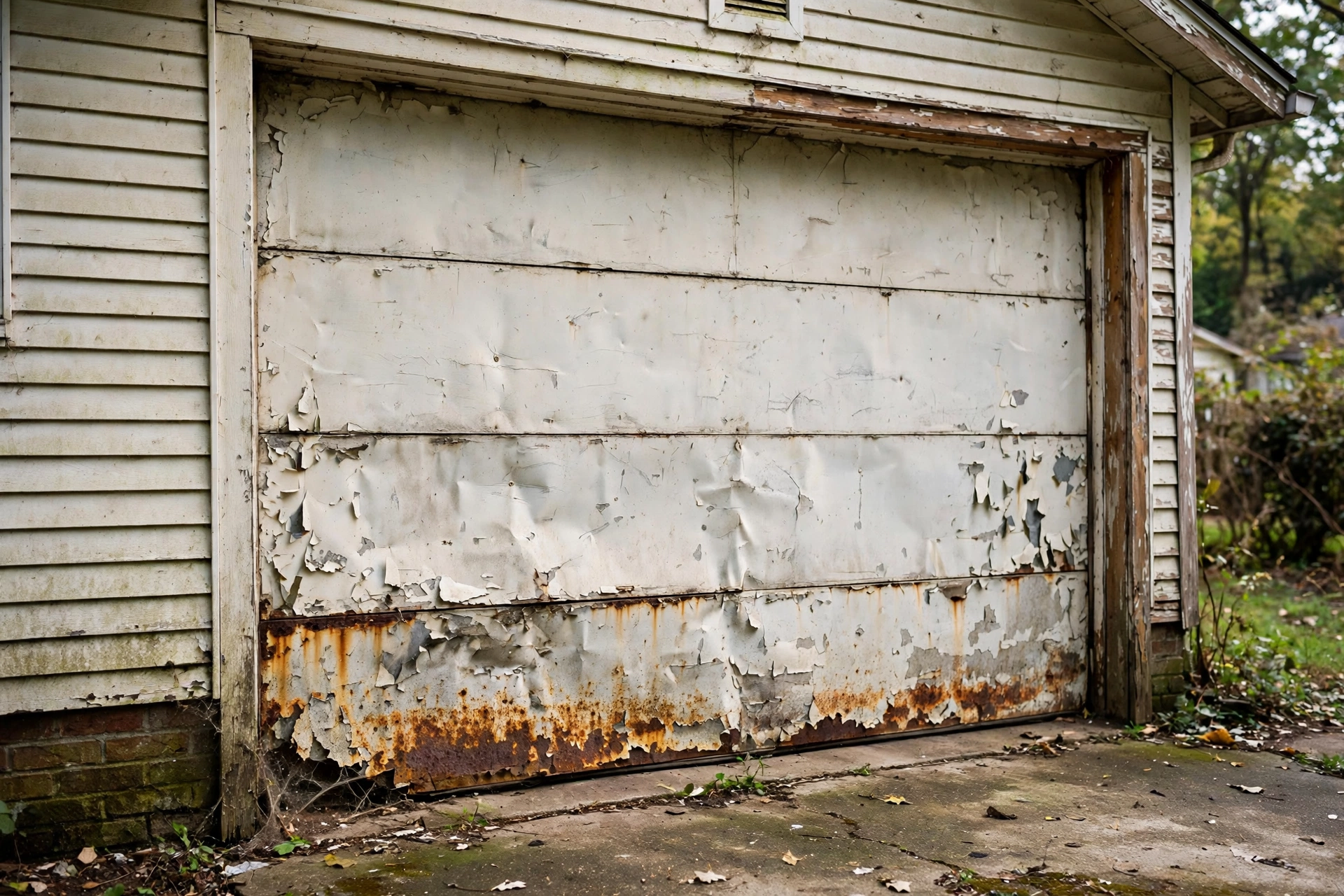
Replacement wins when the door's problems are systemic rather than component-level. Structural rust, especially on bottom sections where Minnesota road salt and snowmelt do their worst, is a system problem: you cannot repair rusted-through steel back to strength. Obsolete parts are another: if the manufacturer discontinued your door's panel profile 15 years ago, every future repair becomes a scavenger hunt. Multiple simultaneous failures (springs plus cables plus rollers plus a dying opener) are the third signal, since the combined repair bill approaches replacement cost without delivering a new door's lifespan, insulation, or warranty.
Energy performance is the Minnesota-specific tiebreaker. A 20-year-old single-layer steel door on an attached garage is an energy sieve, and no repair changes its R-value. The U.S. Department of Energy's Energy Saver guidance notes that insulated garage doors reduce heat transfer, which matters most for attached garages and rooms above them. If your garage is attached and your door is uninsulated, replacement is not just a repair decision, it is an energy decision, and the math should include heating costs, not just the invoice.
Cost Comparison: National Figures
To compare honestly, you need both sides of the ledger in the same units. Nationally, industry cost guides report typical repair ranges of $150 to $350 for spring replacement, $300 to $600 for opener replacement installed, and $150 to $350 for most opener repairs. A full door replacement nationally runs roughly $800 for a basic single door to $4,000 or more for an insulated double door with windows and upgraded hardware. These are national figures, not quotes, and they exist so you can sanity-check the 50 percent rule against your written estimate.
Run the rule with real numbers. If your written repair estimate is $400 and a comparable replacement is $2,200, the repair is under 20 percent of replacement: repair it, assuming the door is otherwise sound. If the estimate is $900 on a door that would cost $1,800 to replace, you are at 50 percent on an aging system, and replacement deserves serious consideration. The rule works best as a tiebreaker when the door's condition is borderline, not as a substitute for inspecting the door.
Insulation and Energy: The Minnesota Multiplier
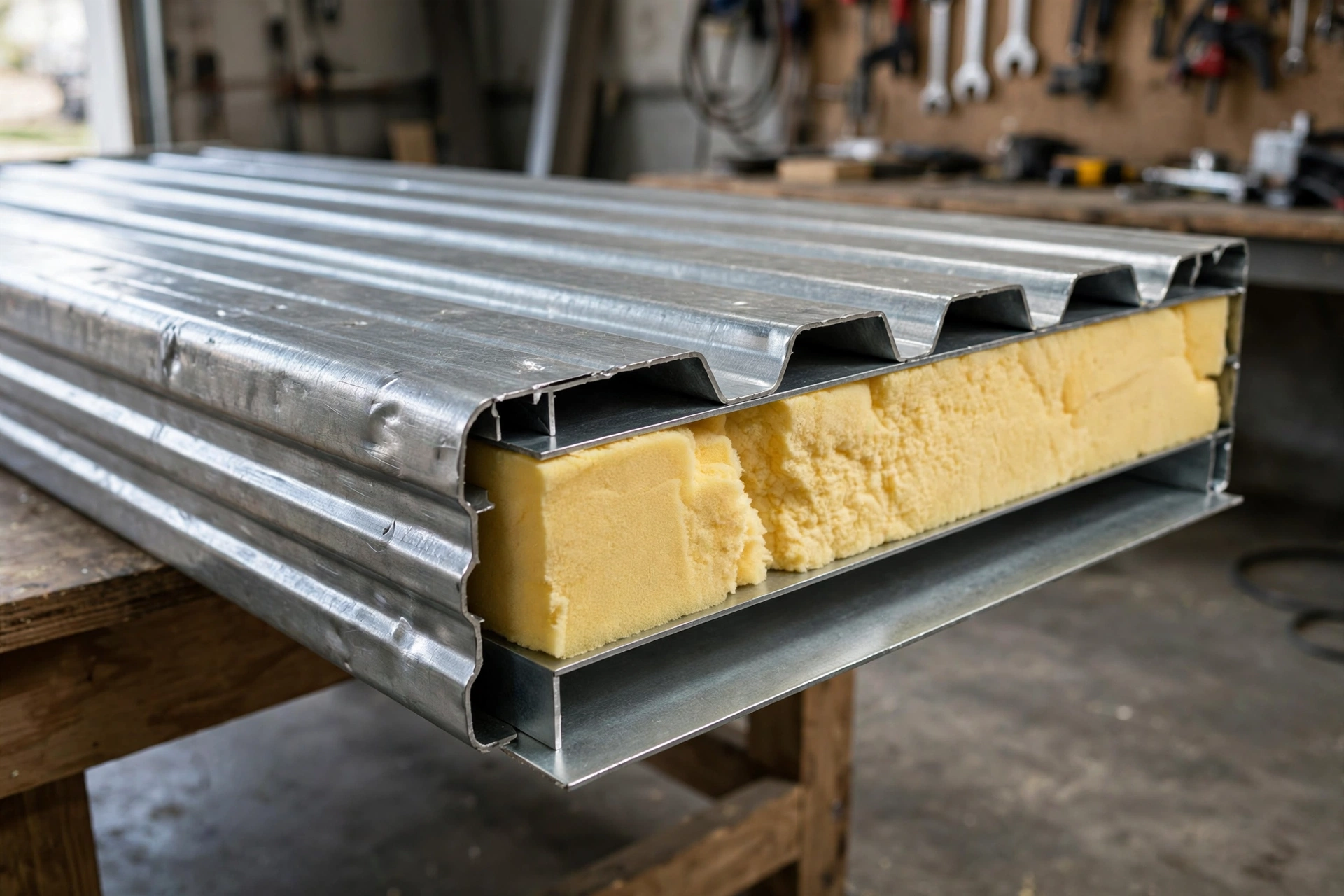
Bloomington's climate changes the repair-vs-replace calculus in a way that national advice often misses. An attached garage in a heating climate is a thermal liability, and the garage door is usually its weakest surface. Insulated doors carry R-value ratings from roughly R-6 to R-18, with polyurethane-injected triple-layer doors at the top of the range. Replacing an uninsulated door with an R-16 door does not just look better, it measurably reduces heat loss through one of the largest openings in the building envelope.
This is where repair can become the expensive option in disguise. Spending $600 keeping a 22-year-old uninsulated door operational preserves an R-value near zero for another few years. The repair invoice looks smaller than the replacement invoice, but the total cost includes every heating season the old door remains in place. When a door is both old and uninsulated in Minnesota, replacement usually wins on total cost of ownership even when the repair itself seems reasonable.
Curb Appeal and Resale Value
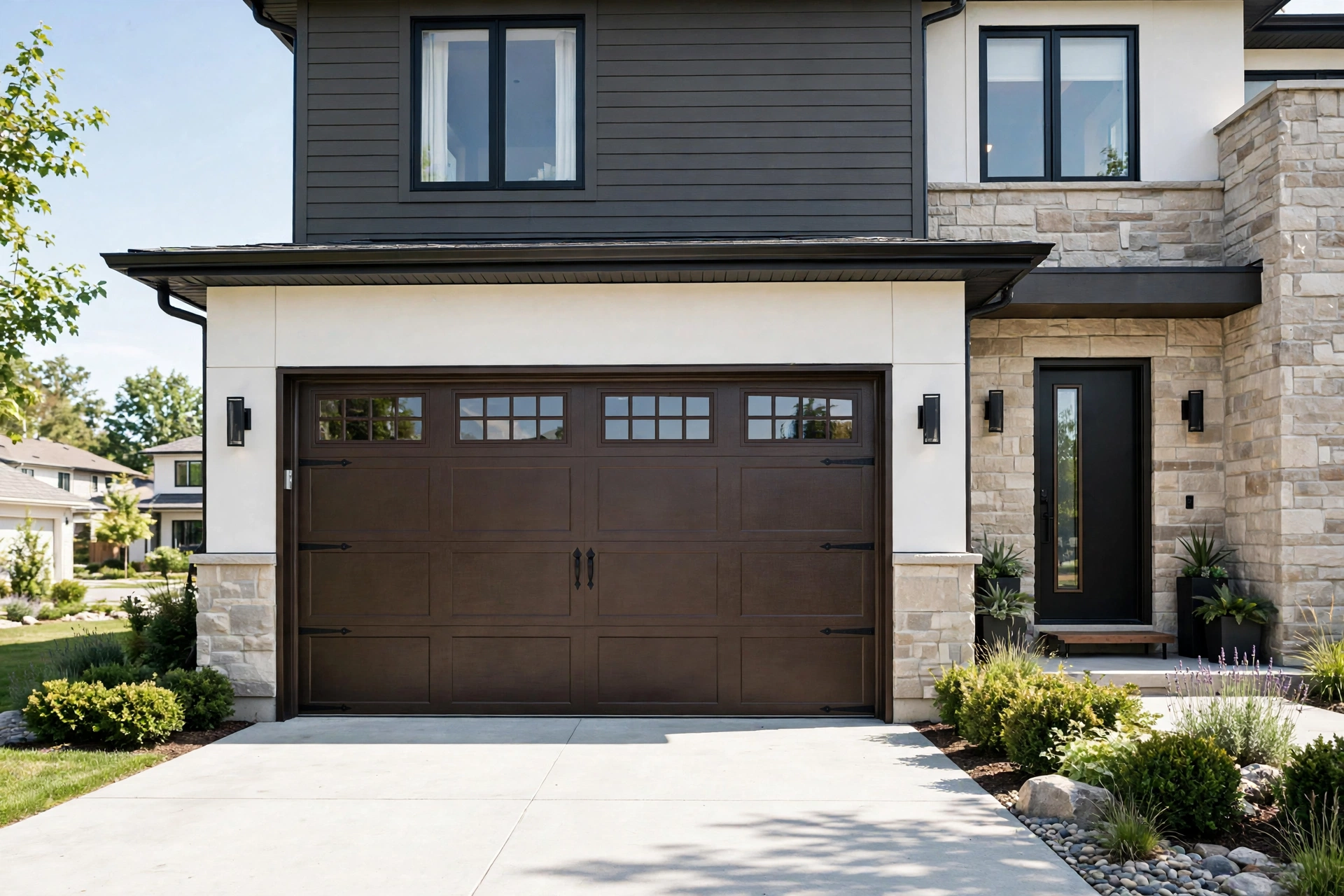
The garage door occupies a huge share of most home facades, sometimes a third of what visitors see from the street. Real estate professionals consistently rank it among the highest-visibility exterior elements, and the annual Cost vs. Value report (published by Zonda and reported by Homes.com) has repeatedly ranked garage door replacement among the top projects nationally for percentage of cost recouped at resale, placing it at the very top of the 2025 national list. These figures describe national resale-value estimates for a standardized project, not a guarantee for any specific home, but the direction is consistent year after year: buyers notice garage doors.
This matters for the repair-vs-replace decision if you plan to sell within a few years. A faded, dented door drags down first impressions in listing photos, while a new door photographs well and signals maintenance to buyers. If a sale is on the horizon and the door is visibly tired, replacement is partly a marketing decision, and repair rarely delivers the same visual return.
Real talk: nobody ever regretted replacing a door that was truly done, but plenty of people have regretted replacing a door that needed a $200 repair. The industry's dirty secret is that replacement is easier to sell than diagnosis. If a company pushes replacement without showing you exactly why repair won't work, get a second opinion before spending thousands.
Safety: The Non-Negotiable Factor
Some conditions take the decision out of your hands. A door with a cracked or rusted-through bottom section can fail structurally, and a door whose springs are mismatched to its weight is dangerous regardless of age. Doors manufactured before modern safety standards may lack pinch-resistant panel joints or proper spring containment, and no repair retrofits those designs. The Door & Access Systems Manufacturers Association publishes safety guidance treating garage doors as the largest moving object in most homes, and that framing is the right one: when safety is genuinely in question, replacement is not optional, it is the repair.
Opener safety belongs in the same category. Openers made before the early 1990s may lack the photo-eye sensors now required, and older fixed-code remotes are trivially easy to clone. If your opener predates modern safety and security standards, replacing it during a door replacement (or even during a major repair) is cheap insurance, since the labor overlaps.
The Opener Question
Door and opener decisions interact. A new heavy insulated door needs an opener rated for its weight, and an aging opener may not be up to the task. Conversely, putting a brand-new premium opener on a door with failing springs is wasted money, since the opener will strain against an unbalanced door and fail early. The practical rule: evaluate them together. If the door is being replaced, budget for the opener conversation at the same time. If the opener is being replaced on an old door, confirm the door is balanced and sound first, or the new opener inherits the old door's problems.
Environmental and Waste Considerations
Replacement means disposing of an old door, usually several hundred pounds of steel, and that deserves a thought. Steel garage doors are highly recyclable, and most installers haul the old door to metal recycling as part of the job. Ask where the old door goes: recycling should be the default, not a favor. From a lifecycle perspective, replacing an energy-wasting uninsulated door with an efficient one also has an environmental payback through reduced heating demand, which in Minnesota is not trivial. Repair is still the lower-waste option when the door has real life left, which is another reason accurate diagnosis matters.
A Decision Framework You Can Actually Use
Walk through these questions in order. First, is the door safe? Structural rust, cracked sections, or dangerously mismatched springs mean replacement, full stop. Second, how old is the door, and are parts still available? Over 15 to 20 years with obsolete parts leans replacement; under 12 with standard parts leans repair. Third, apply the 50 percent rule to your written estimate. Fourth, factor in insulation: an uninsulated door on an attached Minnesota garage adds an energy argument for replacement that the invoice alone misses. Fifth, consider your timeline: selling soon strengthens the case for replacement, staying for a decade strengthens the case for whichever option gives the lowest total cost of ownership.
If the answers point in different directions, weight safety first, then the 50 percent rule, then energy. And when a single repair on a mid-life door is clearly the right call, do not let anyone talk you into a replacement you do not need. One more practical note: if you do decide on replacement, ask whether the installer will recheck the door's balance and the opener's force settings a few weeks after installation, once the new springs have settled. Small post-installation adjustments are normal, and a company that plans for them is a company that stands behind the work.
Real talk: the best garage door companies make less money on the visit where they tell you the truth. A $180 roller replacement on a door with ten good years left is the right answer even though it is a small ticket. Judge a company by whether they will give you that answer, not by how polished their replacement brochure is.
How to Inspect Your Own Door Honestly
You do not need a technician to gather the basic facts. With the door closed, look at the bottom section first: press gently on the lower panels and check for soft spots, bubbling paint, or rust flaking from the inside face, which is where salt damage hides. Look at the springs for gaps in the coil (a broken torsion spring shows a visible separation) and at the cables for fraying. Disconnect the opener (the red pull cord) and lift the door halfway by hand: a balanced door stays put, while one that falls or flies up has a spring problem. Note the opener's approximate age from its label, and check whether the safety sensors near the floor have steady indicator lights. This five-minute inspection will not diagnose everything, but it tells you whether you are describing a component failure or a system in decline, which is exactly the distinction this guide is built on.
While you are looking, check the weather seal at the bottom and the seals between sections. In Minnesota, these harden and crack faster than in mild climates, and failed seals let in the meltwater that rusts bottom sections from the inside. Seal replacement is cheap preventive work, and its absence is often the root cause behind the rust that later forces a replacement decision.
What a Replacement Actually Involves
Understanding the job helps you read the quote. A full replacement starts with removing the old door, tracks, and spring system, then installing new vertical and horizontal tracks, hanging the new sections, installing springs sized to the new door's actual weight, and setting, testing, and adjusting the opener. The spring sizing step is critical and often invisible to the homeowner: springs must match the door weight, and a quality installer weighs or calculates rather than guessing. Disposal of the old door is part of the job, and as noted above, the steel should go to recycling.
Timeline is usually a single day for a standard residential replacement, assuming no structural surprises in the opening. What extends the job is rot or damage in the door frame itself (common where water has been entering around an old unsealed opening), electrical work for a new opener circuit, or custom-order doors with long lead times. A written quote should state the door model, R-value, spring cycle rating, hardware grade, opener details, disposal, warranty terms, and timeline. If any of those lines are missing, ask before signing.
What a Replacement Quote Should Include
When replacement is the call, the quote should itemize the door model and its R-value, the spring system and cycle rating, track and hardware grade, opener model if included, disposal of the old door, and warranty terms for both parts and labor. Vague quotes that list only a total price make comparison shopping impossible and hide the quality differences that determine how the door performs in year eight. Two quotes $500 apart can represent very different doors, and the R-value and spring cycle rating lines are usually where the difference hides.
Frequently Asked Questions
At what age should I replace my garage door instead of repairing it?
There is no fixed expiration date, but doors past 15 to 20 years with a major failure are usually replacement candidates, while doors under 10 to 12 years with an isolated problem are usually worth repairing. Condition matters more than age: a maintained 18-year-old door can outlast a neglected 10-year-old one.
Is it worth replacing an old garage door in Minnesota for energy savings?
Often yes for attached garages. Upgrading from an uninsulated door to an insulated door rated R-12 to R-18 measurably reduces heat loss through one of the largest openings in the home. The U.S. Department of Energy notes that insulated garage doors help most when the garage is attached or rooms sit above it.
How do I know if my garage door is unsafe?
Warning signs include visibly rusted-through or cracked sections, a door that falls or slams rather than moving smoothly, springs that look mismatched to the door size, and the absence of modern safety sensors. If any of these are present, have the door inspected promptly and do not operate it until it is checked.
Should I replace the opener when I replace the door?
Not automatically, but evaluate them together. A new heavier insulated door may need a stronger opener, and an opener over 12 to 15 years old is near the end of its life anyway. If the opener is modern, appropriately sized, and working well, it can stay.
Does a new garage door really increase home value?
National resale data suggests it is among the highest-return exterior projects: the 2025 Cost vs. Value report, as covered by Homes.com, ranked garage door replacement first nationally for percentage of cost recouped. Treat that as a national estimate, not a guarantee, but the curb-appeal effect on listing photos is real and immediate.
Can I replace just the damaged sections instead of the whole door?
Sometimes. If the manufacturer still makes your door's panel profile and only one or two sections are damaged, section replacement can work. On doors older than about 15 years, matching profiles are often discontinued and fading makes new sections visibly mismatched, which is when full replacement becomes the practical answer.
The Bottom Line
Repair the component when the system is sound; replace the system when the problems are systemic. In Bloomington, add the insulation question to every decision, because Minnesota winters punish the total-cost-of-ownership math of keeping an energy sieve alive. Get the failure diagnosed in person, get the number in writing, run the 50 percent rule, and be suspicious of anyone who answers the repair-vs-replace question before inspecting the door. The right choice is the one tied to your door's actual condition, not to a sales target. And whichever path you take, keep up with the small maintenance afterward: a replaced door that never gets lubricated becomes a repair candidate years earlier than it should, and a repaired door that gets annual attention can outlast every rule of thumb in this guide.
References
Door & Access Systems Manufacturers Association. (n.d.). Safety information. https://www.dasma.com
Homes.com. (2025, September 18). Exterior home updates earn highest resale return, report says. https://www.homes.com/news/roundup-exterior-upgrades-have-highest-return-on-investment-real-estate-asset-values-rise-and-more-news/1427239223/
International Door Association. (n.d.). Homeowner resources. https://www.doors.org
U.S. Department of Energy. (n.d.). Energy-efficient doors. Energy Saver. https://www.energy.gov/energysaver/doors-windows-and-skylights
Related services: Emergency garage door repair and garage door installation in Bloomington, MN.