
A garage door that will not cooperate always picks the worst moment: a January morning when you are already late, or a summer evening with the door stuck open. The good news is that most garage door problems fall into a short list of familiar failures, and a calm, ordered check can identify many of them before anyone picks up a phone. This guide walks through the most common symptoms in the order a technician would investigate them, with clear lines between what you can safely check yourself and what belongs to a professional. It is written for Bloomington, MN homeowners, so Minnesota winter gets its own section, because here it earns one.
Safety First: The Two Rules
Rule one: never touch the springs, cables, or anything under spring tension. Torsion springs store enough energy to cause severe injury, and cables under load can snap with violent force. The Door & Access Systems Manufacturers Association treats spring and cable work as professional-only, and that guidance exists because of real injuries. Rule two: if the door is hanging crooked, has a visibly broken spring with a gap in the coil, or has come off its tracks, stop operating it. Forcing a compromised door turns a repair into a replacement and risks the door falling. Everything in this guide respects those two rules: the checks below are observation and simple resets, never disassembly of tensioned hardware.
Symptom: The Door Does Nothing at All
Start with power, since it is the simplest explanation and the most commonly overlooked. Check whether the opener is plugged in (vibration and garage activity loosen plugs over time) and whether the outlet has power by testing it with another device. Check your home's breaker panel for a tripped breaker, and check whether a GFCI outlet upstream has tripped, which is common in garages. If the opener has a battery backup, a depleted backup battery can cause odd behavior during outages, so note whether the problem coincides with a power event.
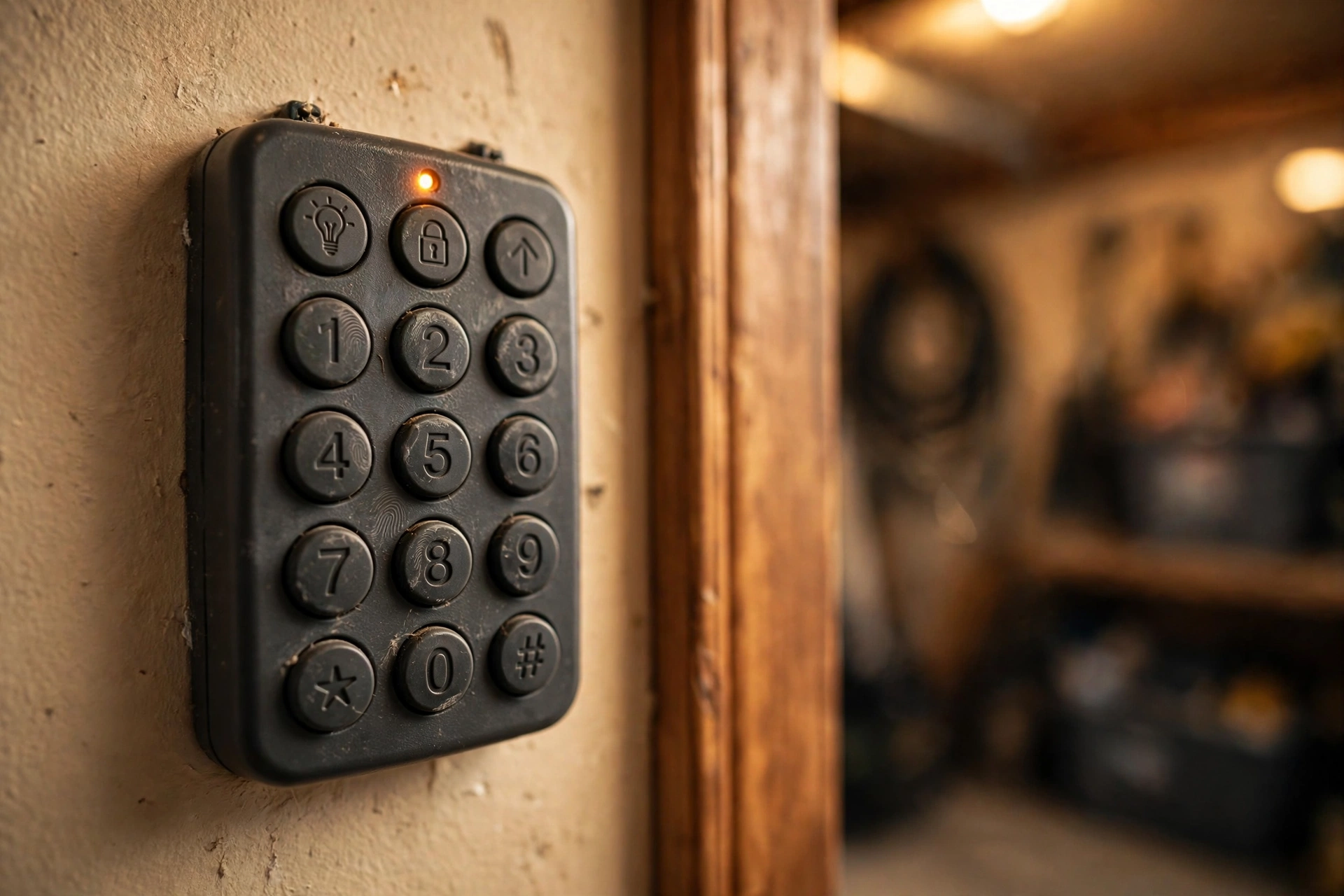
If power is fine but nothing happens when you press the remote or wall button, try the wall control inside the garage. If the wall control works but the remote does not, the problem is in the remote path: dead batteries, a remote that lost its pairing, or radio interference. If neither works, the opener's internal controls may have failed, which moves the issue into professional territory. Also check the opener's lock or vacation mode: many wall consoles have a lock button that disables remotes, and it gets pressed accidentally more often than anyone admits.
Symptom: The Door Starts Down, Then Reverses
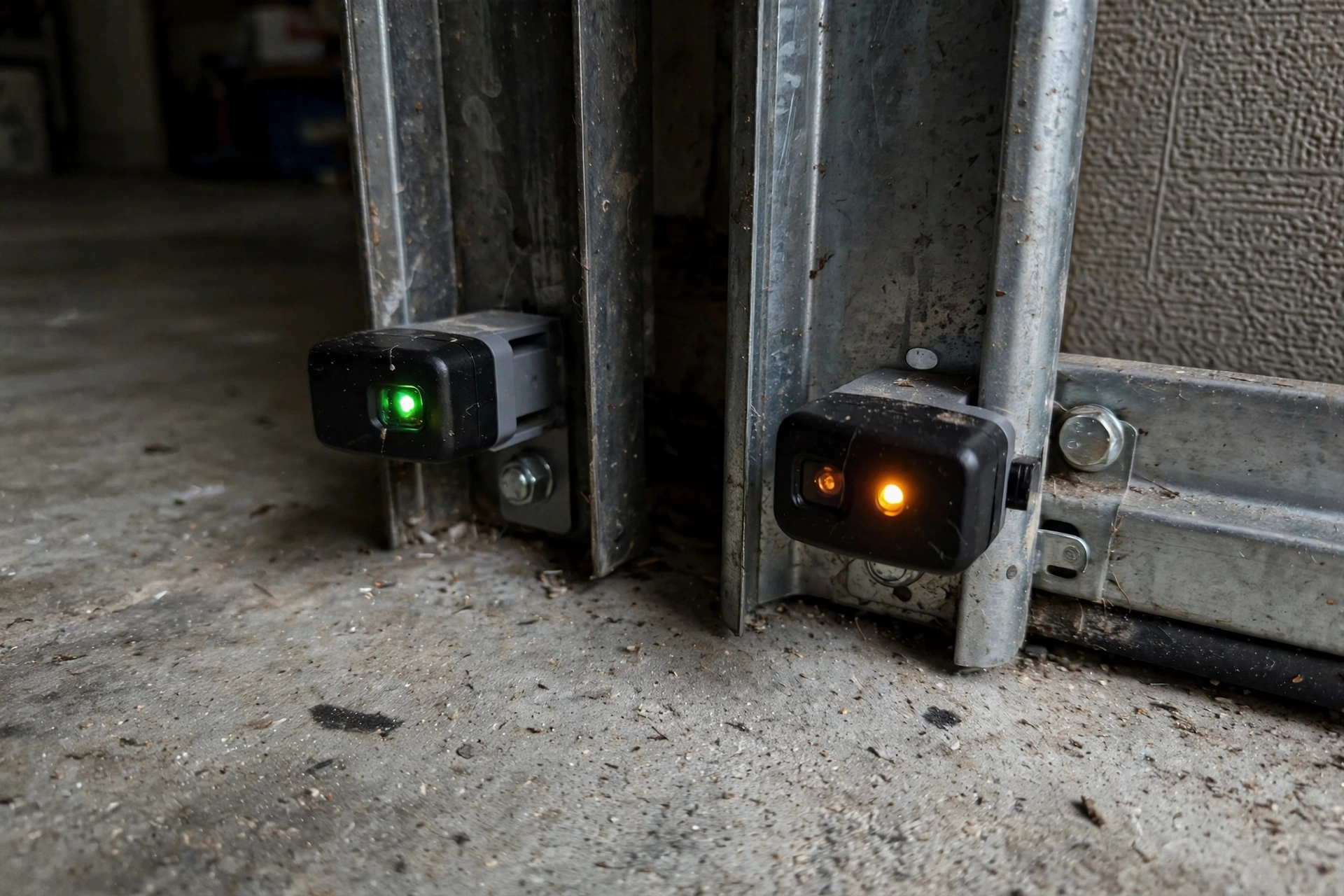
A door that descends a foot or two and then goes back up is almost always the safety sensors. Since the early 1990s, openers have been required to have photo-eye sensors mounted a few inches off the floor on both sides of the door, and if the invisible beam between them is interrupted, the opener reverses as a safety response. The causes, in order of likelihood: something blocking the beam (a trash can, a snow shovel, even a spiderweb), sensors knocked out of alignment, dirty sensor lenses, or a wiring fault.
The homeowner-safe checks: clear the doorway completely, wipe both sensor lenses with a soft cloth, and check that both sensors show steady indicator lights. Most sensors have an LED that glows solid when aligned and blinks or goes dark when misaligned or blocked. If one sensor's light is out, gently realign it by loosening its bracket, aiming it at its partner until the light goes solid, and retightening. If the lights will not go solid, or if the wiring looks chewed or frayed, that is a repair call. Never bypass or disable the sensors: they are the device that stops the door from closing on a child, a pet, or a car bumper.
Symptom: Grinding, Squeaking, or Banging Noises
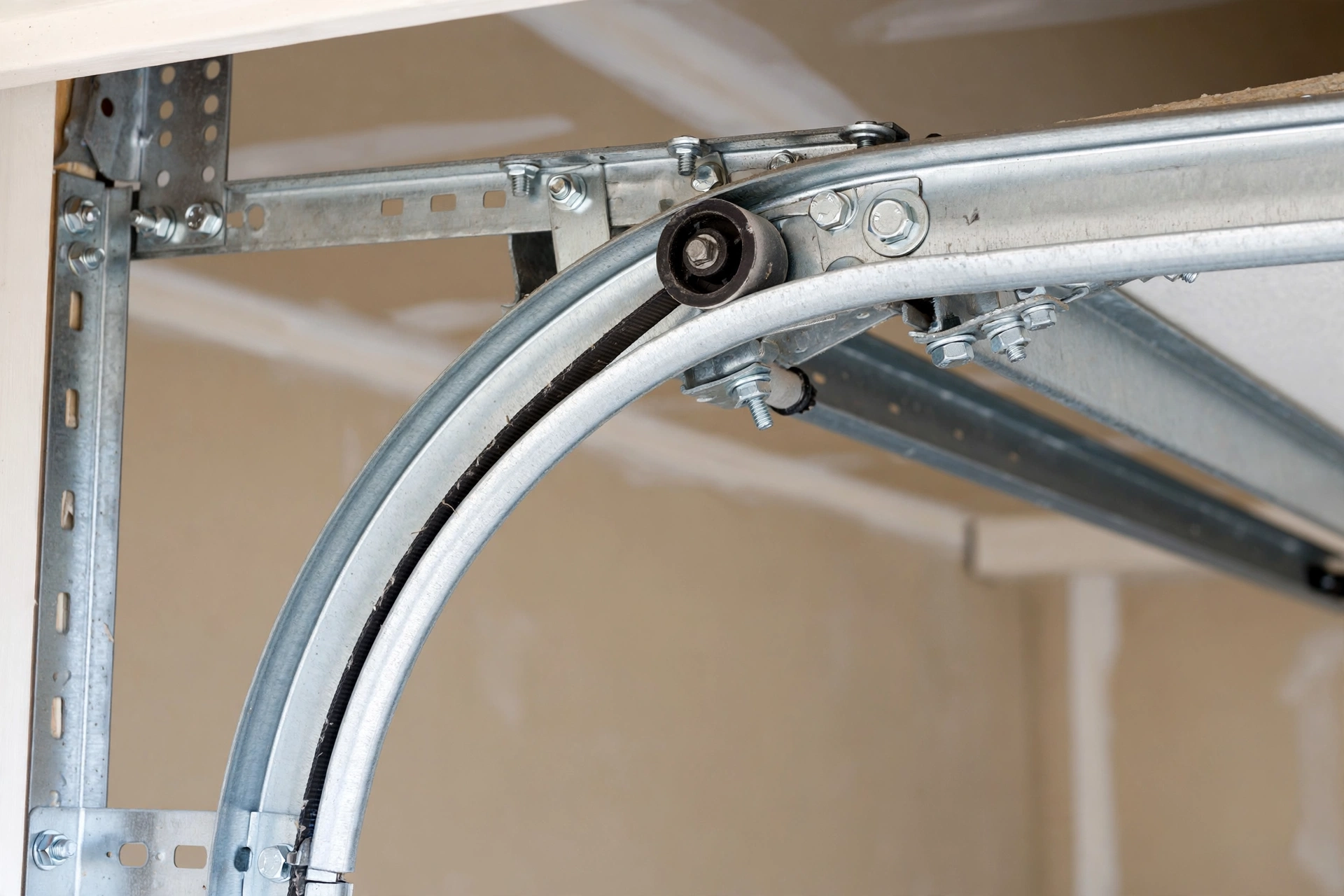
Garage doors are not silent, but new or worsening noises are diagnostic. Squeaking that develops gradually usually means dry rollers or hinges, and a silicone-based garage door lubricant (not WD-40, which is a solvent, not a lasting lubricant) applied to rollers, hinges, and the spring often quiets it. Grinding or metal-on-metal scraping suggests worn rollers, a track rubbing, or a failing bearing. A loud bang followed by the door refusing to lift is the classic broken-spring signature described below.
Rhythmic thumping as the door moves often traces to a single bad roller or a slightly bent track section, since the defect passes the same point each cycle. Rattling usually means loose hardware: the nuts and bolts on roller brackets and track mounts loosen over thousands of cycles, and a socket wrench check of accessible fasteners (with the door closed and the opener disconnected) is safe homeowner maintenance. What noise should never be ignored is any sudden loud crack or pop, which warrants stopping the door and inspecting the springs before operating it again.
Symptom: Remote or Keypad Stopped Working
Work through the remote path methodically. Replace the remote battery first, since weak batteries cause intermittent operation long before total failure. Next, check whether the problem affects all remotes or just one: if one remote works and another does not, reprogram the dead one according to the opener manufacturer's instructions (usually a "learn" button on the motor unit). If no remotes work but the wall control does, check the opener's lock mode, then consider radio interference: LED bulbs installed in the opener itself are a notorious source, since some emit frequencies that drown out the remote signal. Swapping them for garage-door-rated LEDs or moving them away from the motor unit often fixes mysterious remote failures.
For wireless keypads, the same battery-first logic applies, plus one keypad-specific check: after a power outage or battery change, some keypads need their code re-entered. If the keypad is very old and the buttons are worn smooth, replacement keypads are inexpensive and pair with most modern openers. When the wall control works but no wireless device does, and batteries, programming, and interference are all ruled out, the opener's receiver board may have failed, which is a professional repair.
Symptom: The Door Will Not Stay Open, or Slams Shut
A door that drifts down when released halfway, or one that feels extremely heavy to lift by hand, has lost spring tension. This is the spring system telling you it is failing or has failed. Do not continue operating the door in this state: an unbalanced door forces the opener to do the springs' job, which burns out opener motors and can damage the door, and a door that will not stay open can fall unexpectedly.
The safe homeowner test is the balance check. With the door closed, pull the red emergency release cord to disconnect the opener, then lift the door manually to waist height and let go. A properly balanced door stays in place. If it falls, the springs need professional attention. If it flies upward, the springs are over-tensioned, which is equally a professional fix. After any balance test, re-engage the opener by pulling the release cord toward the door (or running the opener until it reconnects, depending on the model). Never attempt to adjust spring tension yourself: this is the single most dangerous homeowner garage door task, and it is the one the safety rules at the top of this guide exist for.
Real talk: YouTube makes torsion spring replacement look like a twenty-minute job with two metal rods. What the video does not show is the selection bias: nobody uploads the video where the winding bar slips. Professionals do this work with the right bars, the right spring for the door's weight, and insurance. Your bravery is not a substitute for any of those.
Symptom: The Opener Runs, but the Door Does Not Move
If you hear the motor running but the door stays put, the disconnect is between the opener and the door. First check the emergency release: if the red cord was pulled (by a curious child, during a power outage, or accidentally), the opener carriage is disengaged and the motor runs freely. Re-engage it per the instructions above. If the carriage is engaged and the motor runs without moving the door, the internal gears may be stripped, which produces a distinctive grinding or whirring from the motor housing. Stripped gears are a common end-of-life failure on older chain-drive openers and usually mean opener replacement rather than repair, since the labor to rebuild approaches the cost of a new unit.
A related symptom: the door moves a few inches and stops, with the opener lights flashing. That is usually the opener's force or travel-limit settings tripping, which can be caused by a door that has become hard to move (dry rollers, binding track, failing springs) rather than an opener fault. The opener is protecting itself. Find and fix the mechanical resistance first; adjusting force settings upward to overpower a binding door just moves the failure somewhere more expensive.
Symptom: The Door Is Crooked or Off Its Tracks
A door that sits visibly uneven in the opening, with a gap on one side, has usually suffered a cable failure or a track problem. Cables work in pairs, and when one frays or snaps, its side of the door drops. This is stop-and-call territory: operating a crooked door can pull it fully off the tracks, bend the tracks, or damage the panels, turning a cable job into a much larger repair. Do not try to force it level.
Less dramatic unevenness, where the door closes but one side touches down slightly before the other, can sometimes be a track alignment issue or a sign of early cable stretch. Either way, it deserves professional eyes, because the underlying cause determines whether it is a simple adjustment or the first symptom of a failing spring system. Take a photo of the uneven gap to show the technician; it helps them bring the right parts on the first visit.
The Minnesota Winter Section: Frozen, Stuck, and Sluggish Doors
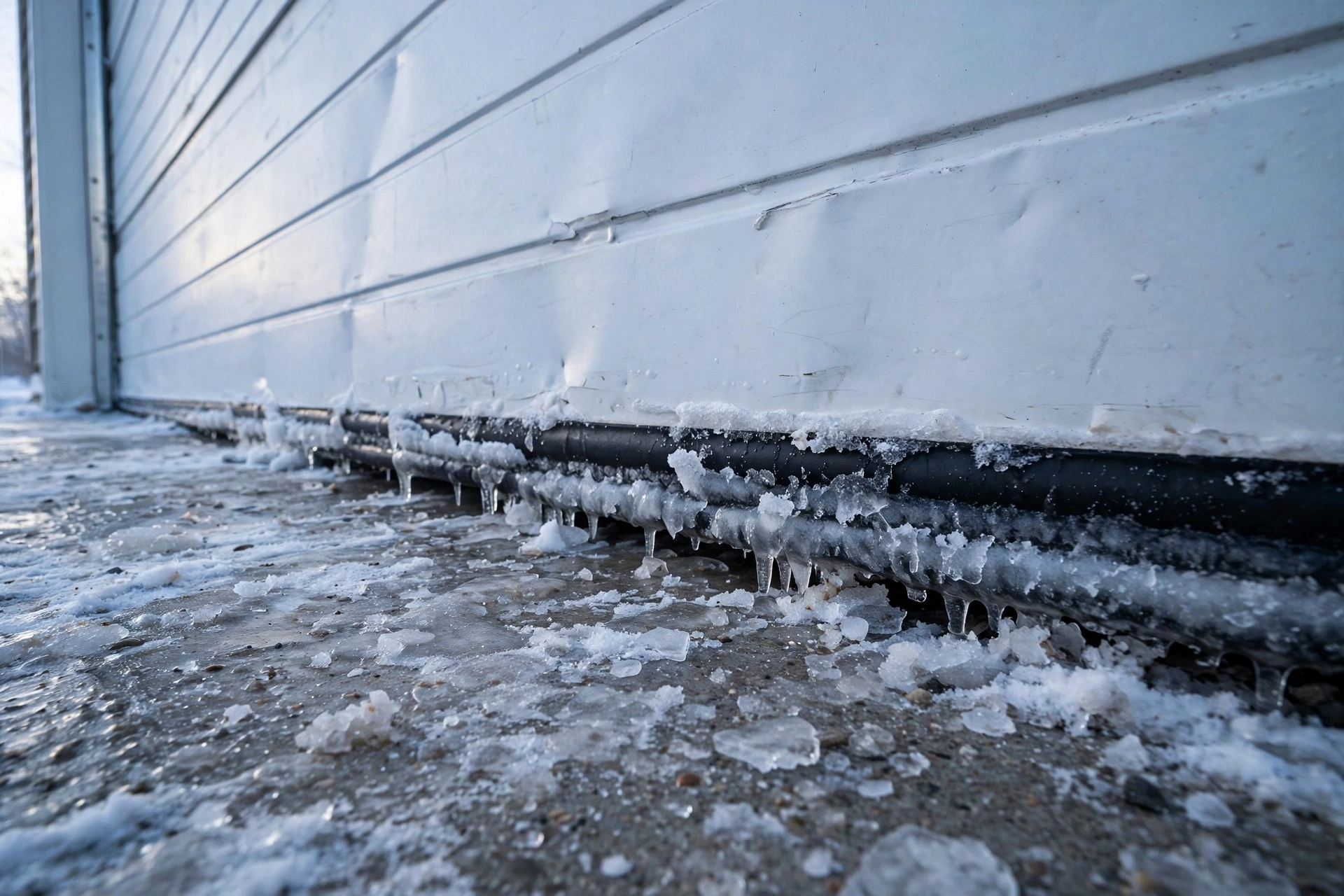
Bloomington winters create a failure category the rest of the country barely knows. The most common: the door frozen to the floor. Meltwater seeps under the bottom seal during the day, refreezes overnight, and by morning the door is bonded to the concrete. The opener strains, the door does not budge, and forcing it can tear the bottom seal or strip the opener gears. The fix is patience and warm water, not force: break the ice bond gently, clear snow and ice from the threshold, and check that the bottom seal is intact. A cracked or missing bottom seal is what lets the water in, so replacing it is the preventive fix.
Cold also thickens old lubricant into a draggy paste, which is why doors get sluggish in January. If your door slows every winter, the lubricant is overdue for replacement with a cold-rated silicone or lithium product. Metal contraction is another factor: tracks and hardware shift minutely in deep cold, and a door that is marginally aligned in October can bind in January. Springs are more brittle in extreme cold as well, which is why Minnesota sees a wave of spring failures during the coldest snaps. None of this means the door is doomed; it means winter maintenance here is not optional the way it might be in a mild climate.
Road salt deserves its own mention. Salt mist from the driveway settles on bottom brackets, cables, and lower track sections, and the freeze-thaw cycle drives it into every crevice. Rinse the lower door area when you wash the car in winter, and wipe down visible bottom hardware in the fall. Five minutes of prevention beats a rusted-through bottom bracket every time.
What Your Opener's Flashing Lights Are Telling You
Modern openers communicate through light patterns, and learning the basic vocabulary saves a lot of guessing. On most major brands, a flashing wall-control light or a specific number of blinks from the motor unit's LED corresponds to a fault code: sensor obstruction, excessive force detected, or a travel-limit problem. The exact codes vary by manufacturer and model year, so check the label on the motor housing or the manual before interpreting them. What matters for troubleshooting is the pattern: a code that appears only in cold weather points to mechanical resistance (lubrication, binding), while a code that appears consistently points to a failed component (sensor, gear, board). Write down the blink count and when it happens before calling; it is the single most useful piece of information you can give a dispatcher, and it often determines which parts come on the truck.
One caution: some owners respond to fault codes by repeatedly pressing the remote until the door finally moves, which can work the opener past its safety limits. If a fault code keeps returning, the opener is detecting a real problem. Clearing the code without addressing the cause is the electronic version of turning up the force setting, and it ends the same way.
When to Stop Troubleshooting and Call a Professional
Call when you find any of the following: a broken spring (visible gap in the coil), frayed or snapped cables, a door off its tracks, a door that falls or slams, any opener electrical issue beyond batteries and programming (burning smell, scorched wiring, repeated breaker trips), or any problem where the cause is not clear after the basic checks above. Also call when the door is simply old and the failures are arriving in clusters: troubleshooting individual symptoms on a system that is fundamentally worn out wastes your weekends.
What to tell the dispatcher matters. Describe the symptom ("door reverses halfway down, sensor light blinking"), the door's approximate age, and anything you already checked. That information lets them dispatch with the right parts, which is often the difference between a single visit and two.
Real talk: the most expensive troubleshooting is the kind that "fixes" the symptom while hiding the cause. Cranking up the opener's force setting to muscle past a binding track does not fix the track; it just schedules a more expensive failure. A good technician would rather find the binding than sell you a bigger motor, and you should want the same thing.
Seasonal Maintenance That Prevents Most of This
Nearly every symptom in this guide is either prevented or caught early by basic maintenance. Twice a year, in fall before the freeze and in spring after the thaw, run through this list: lubricate rollers, hinges, and springs with a silicone-based garage door lubricant; tighten accessible nuts and bolts on tracks and brackets; test the door balance as described above; check the sensor lights and wipe the lenses; inspect cables for fraying and the bottom seal for cracks; and run the opener's safety reversal test by placing a 2x4 flat on the floor under the door (the door should reverse on contact, per long-standing industry safety guidance). The whole routine takes about thirty minutes and catches the worn roller, the fraying cable, and the weakening spring before any of them becomes a no-heat January emergency.
Frequently Asked Questions
Why does my garage door only fail in winter?
Cold makes steel springs more brittle, thickens old lubricant into drag, contracts metal tracks slightly out of alignment, and freezes bottom seals to the concrete. In Minnesota, winter does not create new problems so much as expose every marginal component at once. Fall maintenance is the preventive answer.
My door reverses for no reason. What is the most likely cause?
Misaligned or dirty safety sensors, in the large majority of cases. Clear the doorway, wipe both lenses, and check that both indicator lights glow steady. If the lights will not go solid after realignment, the wiring or the sensors themselves need professional attention.
Can I use WD-40 on my garage door?
Not as a lasting lubricant. WD-40 is primarily a solvent and water displacer; it quiets squeaks briefly and then evaporates, leaving metal drier than before. Use a silicone-based or white lithium garage door lubricant on rollers, hinges, and springs, and avoid lubricating the tracks themselves, which should stay clean for the rollers to grip.
Is it safe to manually lift a garage door with a broken spring?
Only with extreme caution and ideally not at all. A standard door weighs 150 pounds or more, and without spring counterbalance you are lifting all of it, with the risk of it falling. If a car is trapped inside, call for service rather than risking injury. This is one of the situations emergency service exists for.
Why does my remote work sometimes but not always?
The usual suspects are a weakening battery, the opener's lock mode being engaged, or radio interference, often from LED bulbs installed in the opener unit itself. Replace the battery, check the lock button on the wall console, and if problems persist, try removing or relocating LED bulbs near the motor unit.
How often should I maintain my garage door in Minnesota?
Twice a year at minimum: once in fall before sustained freezing, and once in spring after the thaw. The fall visit is the critical one, covering lubrication with cold-rated products, balance testing, seal inspection, and sensor checks before the season that stresses every component.
The Bottom Line
Most garage door problems announce themselves clearly if you know the vocabulary: reversing means sensors, a bang means springs, grinding means rollers or tracks, and a dead remote usually means batteries or programming. Work through symptoms in order, respect the two safety rules, and let winter be the reminder rather than the emergency. And when the checks point past what is safe to touch, springs, cables, and anything under tension, that is not a defeat. That is the troubleshooting process working exactly as it should, telling you precisely when to hand the job to someone with the right bars, the right parts, and the right insurance.
References
Door & Access Systems Manufacturers Association. (n.d.). Technical data sheets. https://www.dasma.com
International Door Association. (n.d.). Homeowner resources. https://www.doors.org
U.S. Consumer Product Safety Commission. (n.d.). Garage door safety. https://www.cpsc.gov
U.S. Department of Energy. (n.d.). Energy-efficient doors. Energy Saver. https://www.energy.gov/energysaver/doors-windows-and-skylights
Related services: Garage door opener repair and garage door sensor repair in Bloomington, MN.